ESG Commitments in the Indian Palm Oil Sector
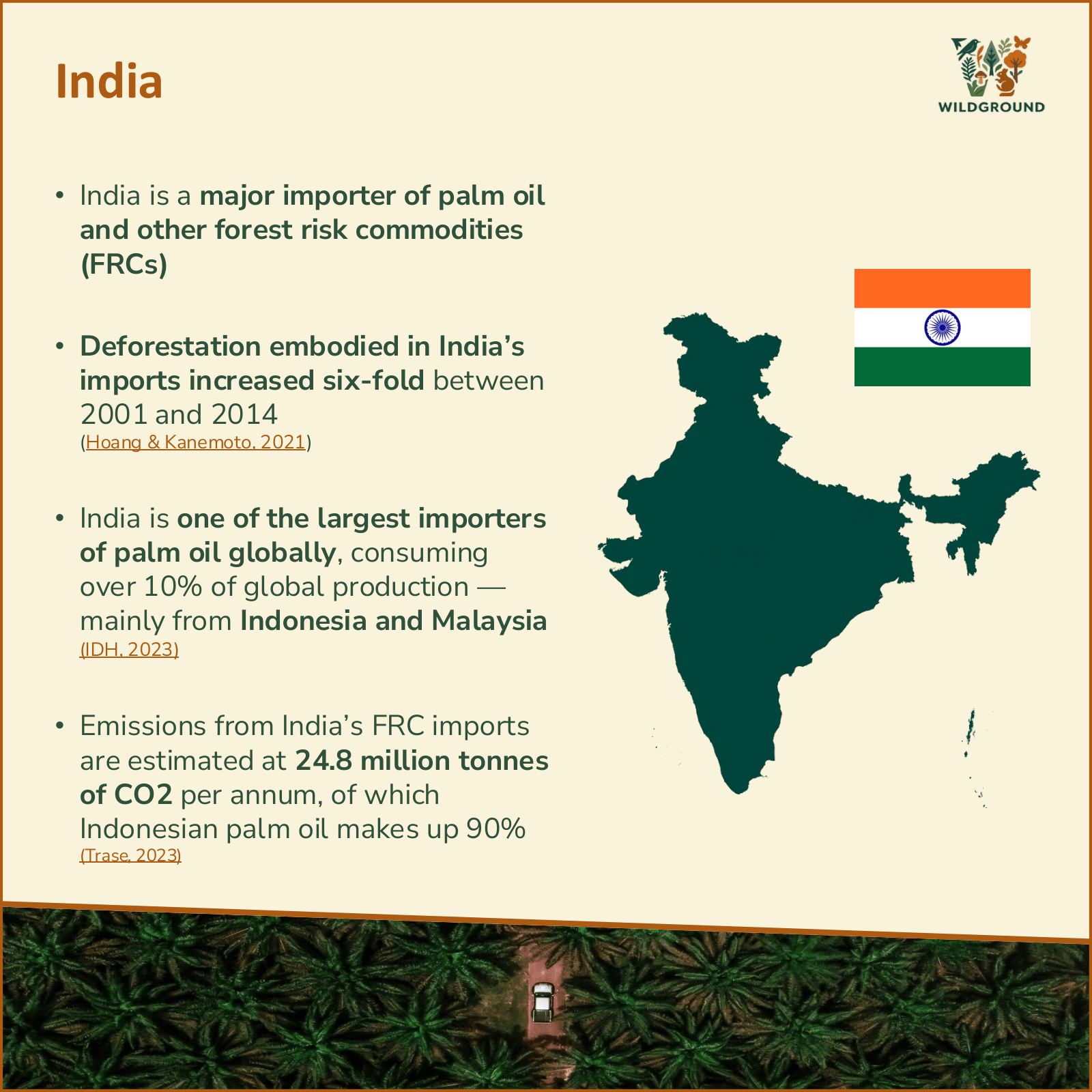
India imports over 10% of the world’s palm oil. So why are Indian palm oil companies scoring below 10% on ESG transparency?
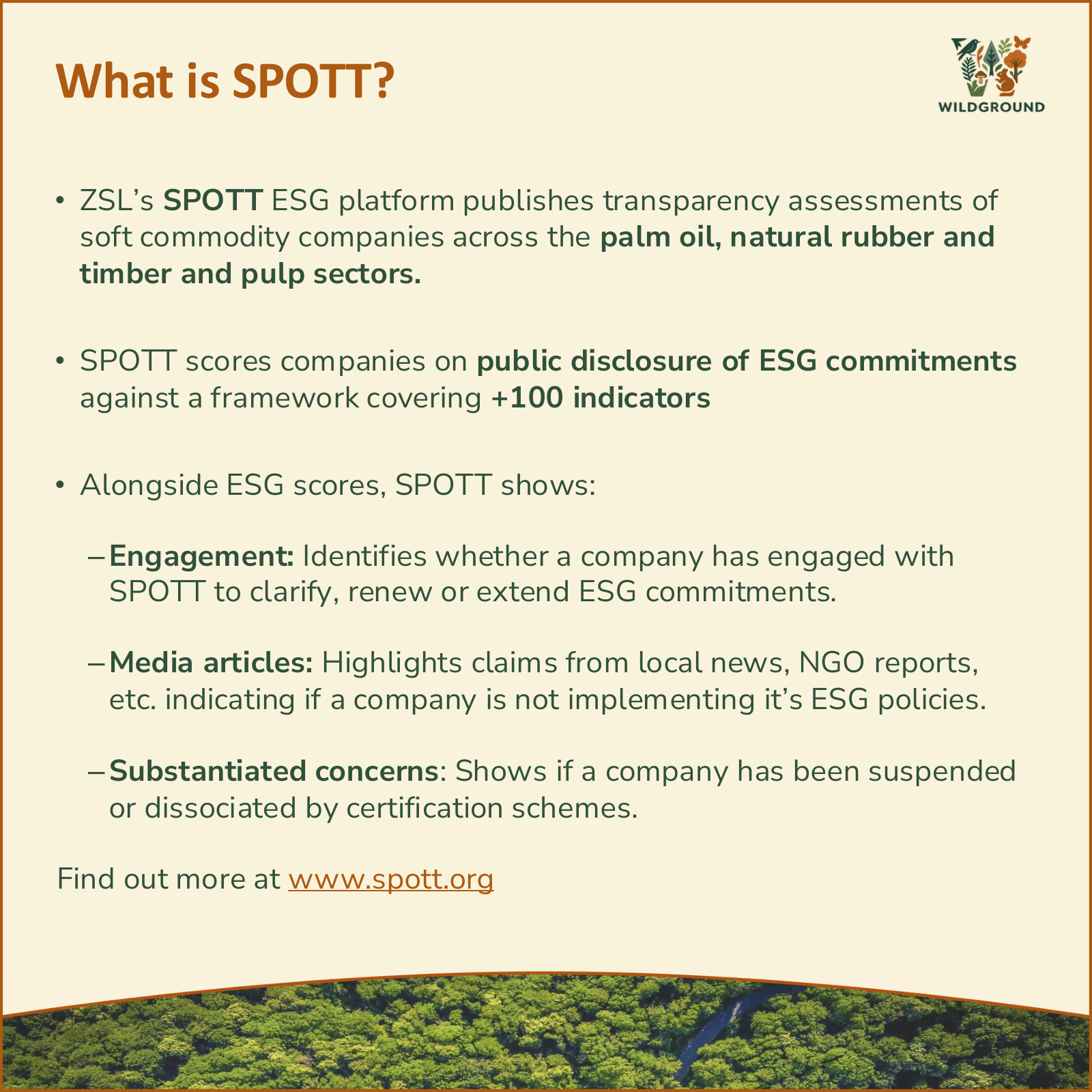
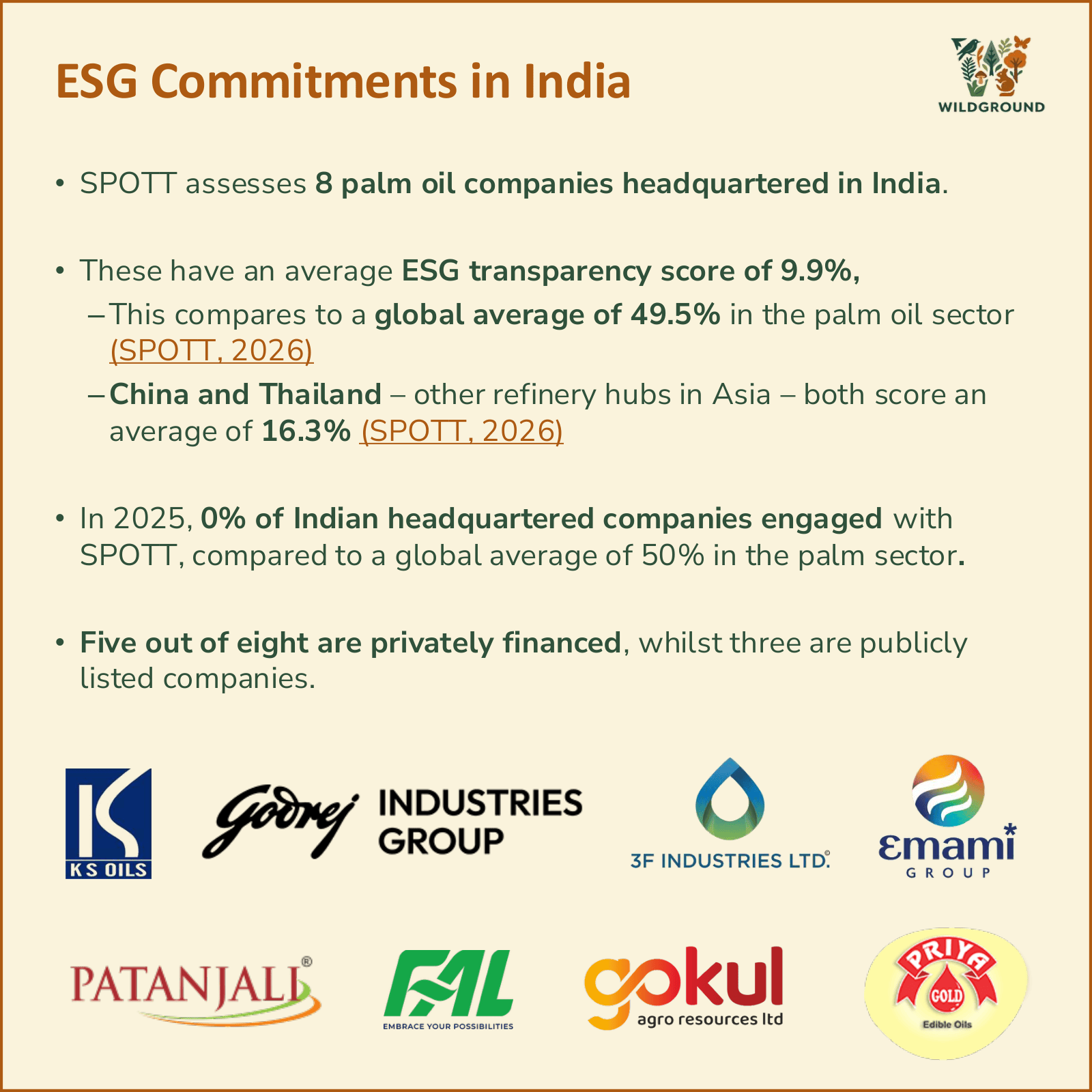
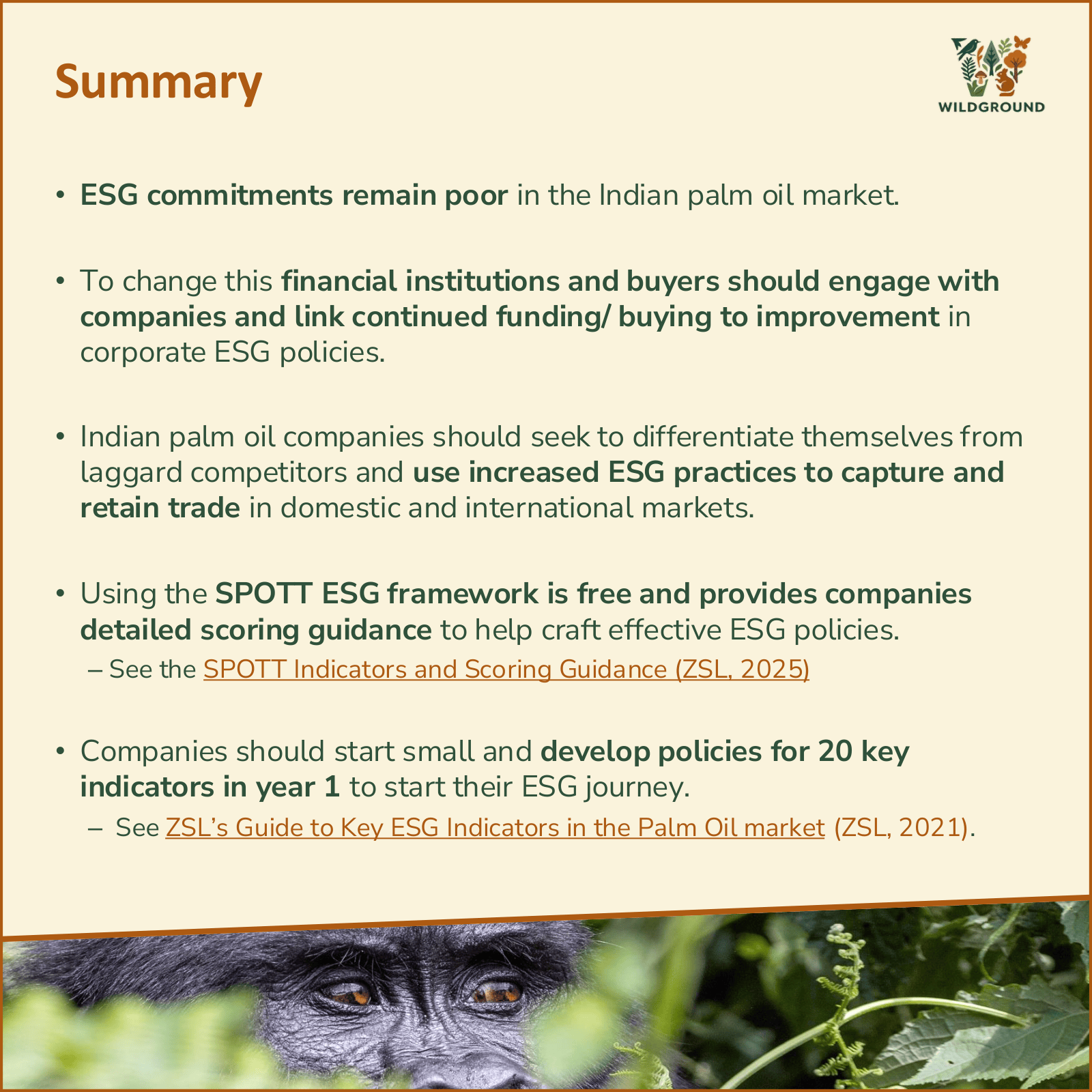
Our newly released mini-guide assesses 8 palm oil companies headquartered in India using ZSL’s SPOTT ESG framework, providing a comparative view against regional and global peers.
The findings are clear:
Persistent underperformance on ESG disclosure
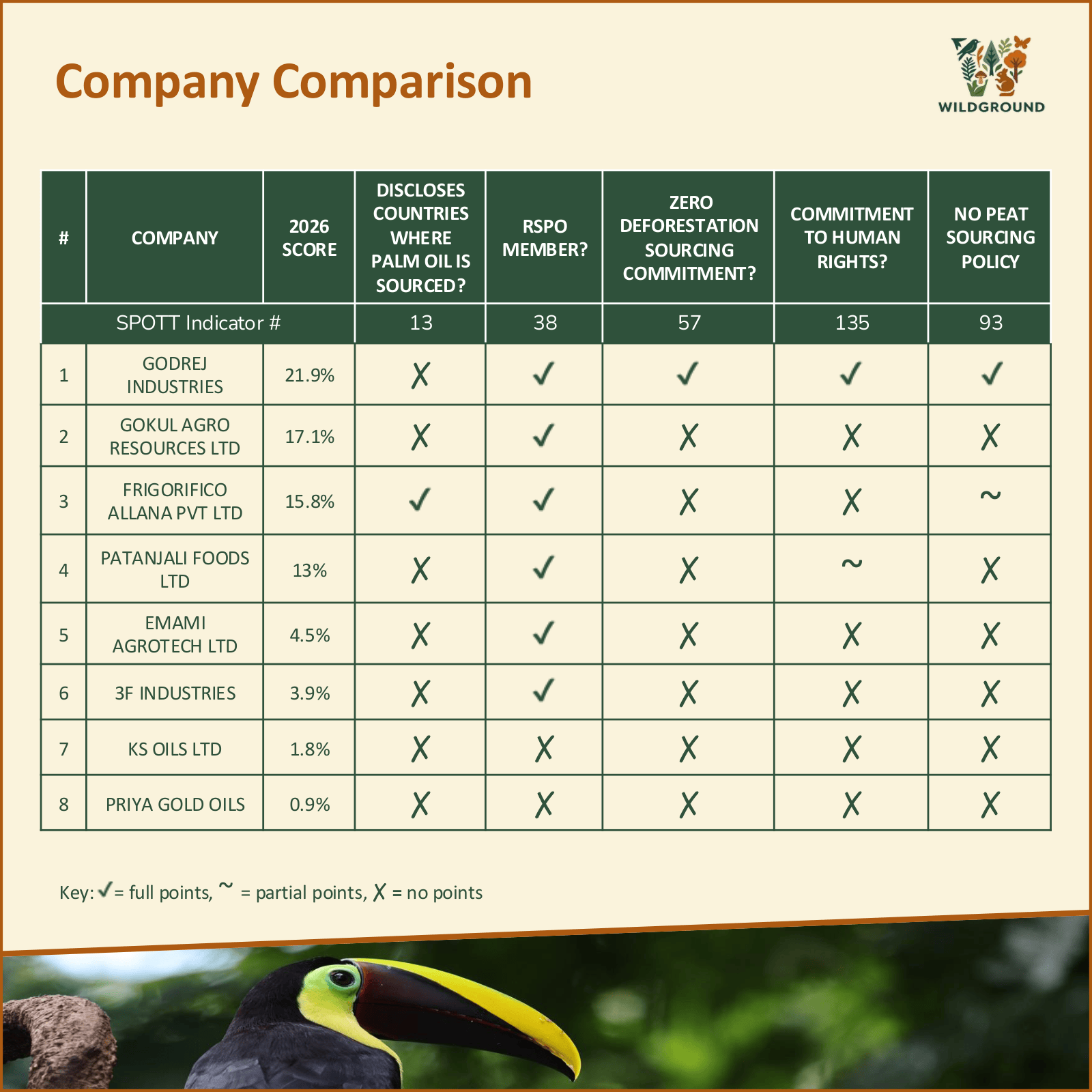
Indian-headquartered palm oil companies score an average of 9.9% on SPOTT, compared with significantly higher averages among European and international companies operating in India — and even compared to Chinese and Thai refinery hubs.RSPO membership is not translating into public commitments
While many companies are RSPO members, this has not resulted in clear, publicly disclosed policies on core RSPO Principles & Criteria, including:
• Human rights
• Zero deforestation
• No planting on peatLimited market pressure across ownership structures
Both privately financed and publicly listed companies perform poorly, suggesting insufficient investor and buyer expectations around ESG transparency and sourcing standards.Easy wins for Indian companies
Precisely because ESG commitments are currently weak, there is a low barrier to differentiation. Companies could rapidly improve their standing by implementing foundational sourcing policies, such as:
✔ A public commitment to respect human rights
✔ Zero-deforestation sourcing requirements
✔ A prohibition on planting on peat across supply chains
These are well-established expectations in global palm oil markets, yet remain absent or poorly disclosed among many Indian companies.
The mini-guide outlines where the gaps are and how companies, financiers and buyers can use SPOTT as a practical starting point for improvement.