Supporting EUDR compliance for Balinese handicraft supply chains
A Shared Earth & Wildground Collaboration
By Oliver Cupit, Founder & Director of Wildground
In September 2026, Wildground visited Bali to help map supply chains and conduct legality and deforestation analysis for Shared Earth – the UK’s leading retailer of sustainable and recycled products. As a UK company, Shared Earth is not subject to the EU Deforestation Regulation (EUDR), but their customers are. As a result, Shared Earth is having to respond to information requests from its buyers, showing that the impact of the regulation is reaching beyond EU borders. In this article, we explain how Wildground supports businesses and smallholder producers in Asia and Africa to demonstrate that their products are legally produced and deforestation-free.
About Shared Earth
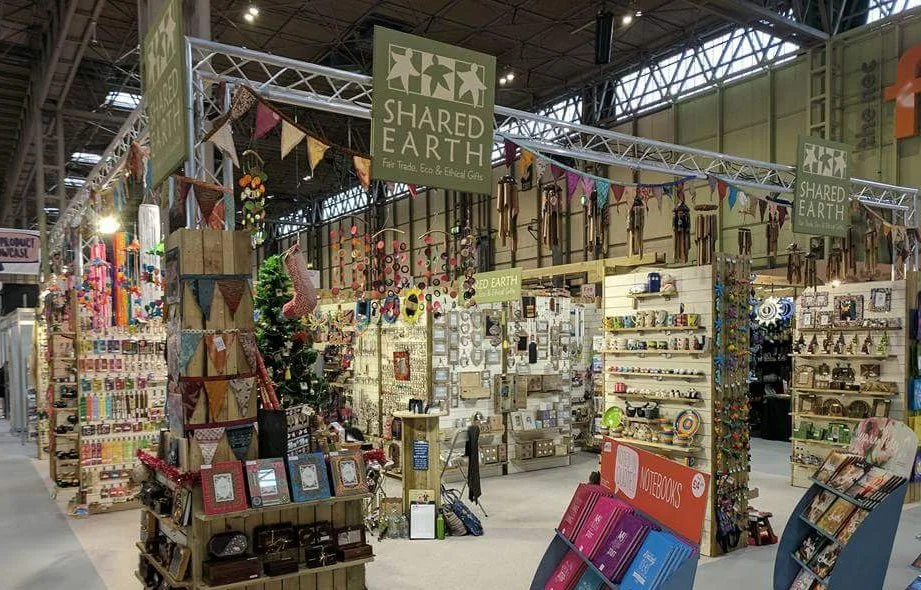
I met Shared Earth’s Founder & Director, Jeremy Piercy, in 2025 when presenting to a group of businesses about the EU Deforestation Regulation. In 2026, when Wildground was founded, Jeremy reached out to propose a collaboration on responsible sourcing, with a key focus – to make sure that smallholder producers in Asia are supported to demonstrate how their produce complies with the EUDR. Shared Earth supply chains are designed to support small producers and the company’s mission is to sell Fair Trade, recycled, eco-friendly and ethical products, thereby helping tackle the climate crisis and create a fairer, more sustainable world. The organisation has two retail shops in York and Liverpool as well as a thriving wholesale business, selling to buyers such as Oxfam.
Shared Earth sources primarily from handicraft producers in Indonesia and India. In Bali, Shared Earth set up Sjahlendra Handicrafts and still work closely with the Director, Yuliana, to procure from a range of artisans in Bali. Sjahlendra is part-owned by producers, and aims to provide security to artisans and their families. They use local, sustainably sourced raw materials such as bamboo, albesia wood, coconut, tree roots and driftwood as well as recycled glass, paper and textiles. Women own and run 65% of the roughly 30 producer groups, with another 15% run by husband/wife teams.
Shared Earth views its business through the lens of maximising benefit to people and planet – that ethos is at its core. So a Wildground x Shared Earth collaboration was a natural one, with both organisations supporting the aims of the EU’s new regulation to tackle deforestation (with company due diligence obligations set to take effect from 30 December 2026). But that’s not to say that detailed traceability, supplier engagement and robust risk assessment is easy. Shared Earth’s collaboration with Wildground is representative of what many small businesses will experience when implementing the requirements of the EUDR.
“Businesses play a key part in increasing CO2 emissions and harming our planet, cutting down natural forest being one example. We fully support the EU as it introduces legislation to prevent this. However, as a small business, we don’t have the resources or the knowledge to comply with all the new requirements. So we are delighted to be working with Wildground in Bali, where we source a large percentage of the wood used to make our handicrafts. They have mapped the geolocations of our 3 key wood producers, and given our suppliers on the ground the tools to map those of other producer groups not yet covered, to comply with the new legislation. ”
Supply Chain and Farm Mapping
Shared Earth know their suppliers very well. An ethically focused business model and Fair Trade certification has provided them a strong relationship with some very talented handicraft producers. All the producers are based in the Ubud region of Bali. Yuli and her team at Sjahlendra Handicrafts visits them day in, day out and Jeremy visits Bali regularly as well. But the EUDR requires businesses to go beyond their direct suppliers. It requires them to know where the raw material were grown, map those locations and conduct analysis to ensure no deforestation occurred on that land after 31st December 2020. So we started by understanding the supply chain and teaching smallholders how to map their landholdings.
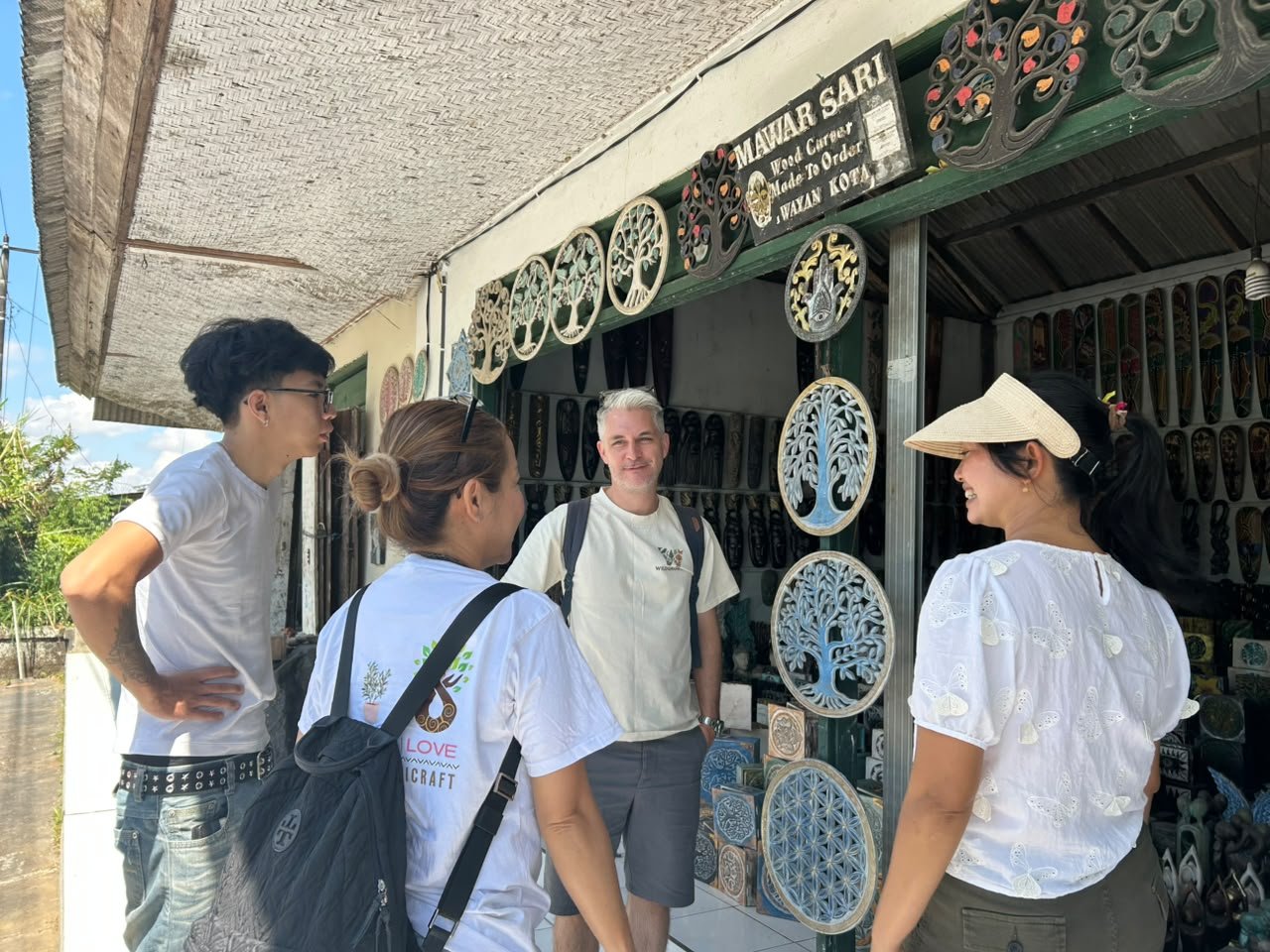
Yuli and the team at Sjahlendra conducted preliminary supply chain mapping with smallholders and explain about the EUDR requirements. They lined up the key suppliers and Wildground joined them on the ground to help build capacity. We visited handicraft producers at their stores and workshops in Ubud and interviewed them to understand their sourcing. We verified those that source from their own land and where they sourced from sub-suppliers, helped quantify how much produce they purchase from each source and helped mapped the landholdings.
Crucuially, we gained consent to gather supply chain information from producers. We followed FPIC (Free, Prior and Informed Consent) principles as well as guidance on inclusive smallholder data governance, defined by FAO & Preferrred by Nature.
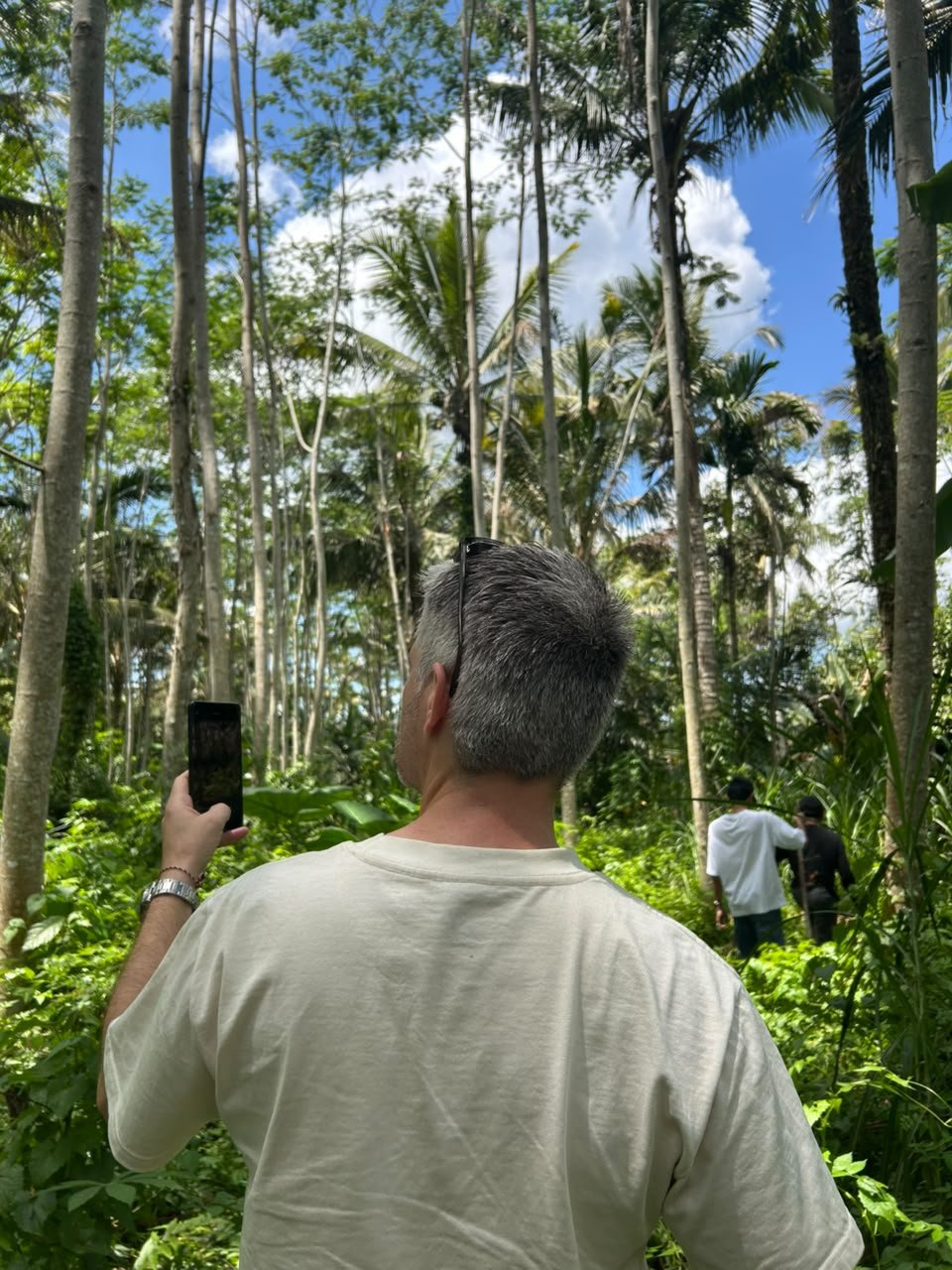
We used the EUDR Tracer app created by Plant For the Planet, as it’s free to use, simple and can be used offline. It’s designed for use by small farmers to map their land and cater to information requests from buyers in Europe. We made sure each smallholder ended the day with an understanding of why buyers were requesting information on their landholdings, and a map of their lands to share (or not) as they see fit in future.
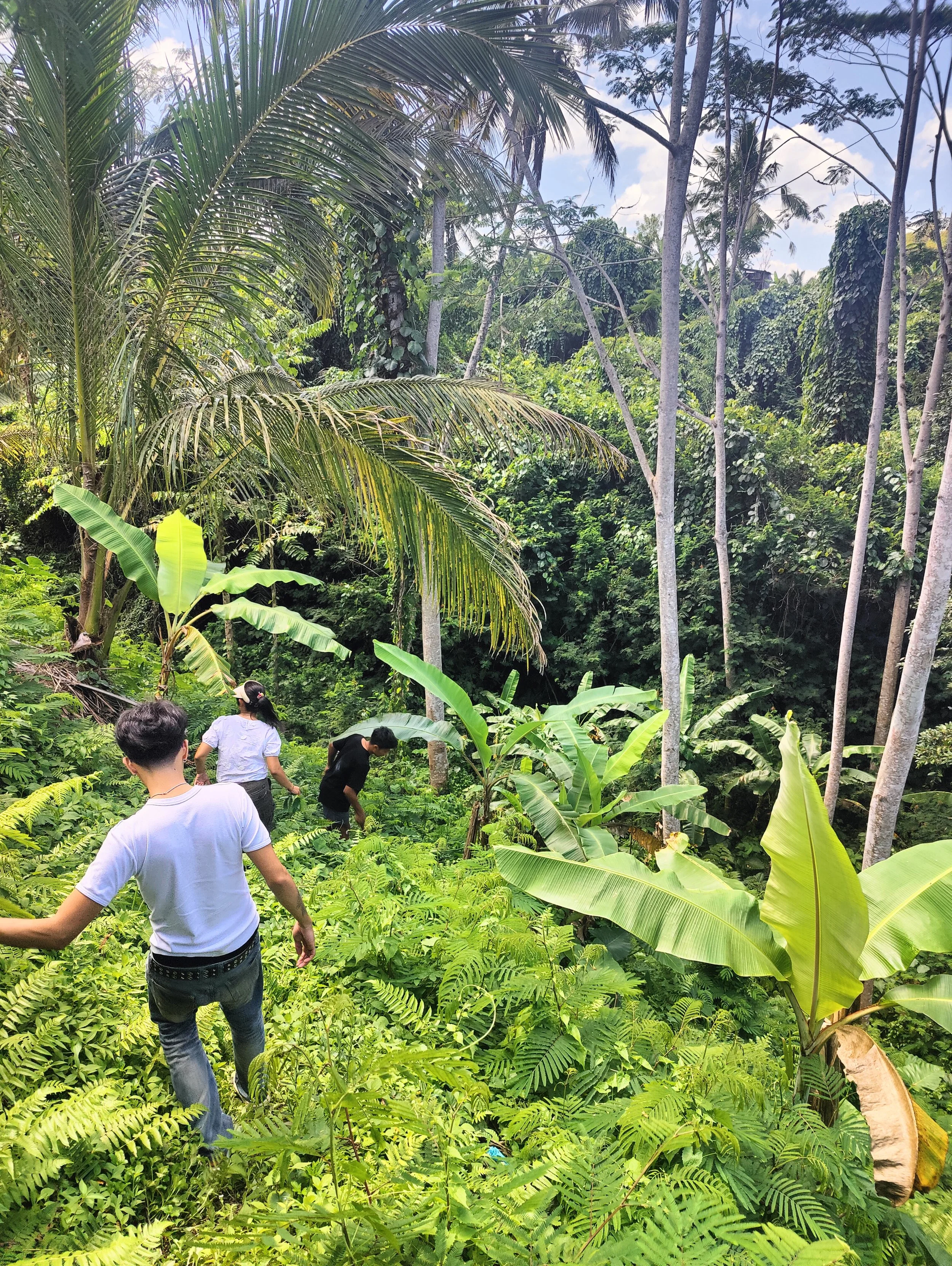
We traversed some steep terrain in search of the corners of farm plots to get our maps as accurate as possible. We also collected field photos, documentation and interview evidence vital for a robust risk assessment. We talked to farmers on their EUDR-relevant production of albesia, jempinis, as well as their production of coconut, mangosteen, banana, gunggung berries. We were treated to some stunning vistas as well as delicious fresh coconuts along the way…
Assessing Legal Compliance
For buyers, one of the most challenging parts of the EUDR is the assessment of risks related to the legal status of the area of production - especially in often informal smallholder supply chains. Before arriving on site, Wildground conducted a rigorous national level risk assessment for Indonesia and a subnational risk assessment focused on Bali. This helped identify the common legality and deforestation risks across Indonesia, and then parse out which of these were, say, caused by commercial palm oil production in Kalimantan, and which risks may be applicable to Balinese timber producers. We researched the national and regional legal framework as well as the local customary rules for production.
Then during field visits we explored land tenure with suppliers and harvesting, transport and other requirements for timber associated with this tenure type. As is characteristic of Bali, suppliers reported a high level of private titled land (Hutan Hak) with clear tenure rights.
Deforestation Risk Assessment
Many large companies have already invested in all-singing, all-dancing supply chain traceability software that allows near-real time deforestation monitoring and fire alerts and integration with company procurement systems. But for smaller companies like Shared Earth, some of these options are off the table. The price tag is too high for the volumes traded.
However, open-access deforestation tools are perfectly adequate for some companies. The deforestation rate in Bali is low compared to the rest of Indonesia, and is driven largely by tourism infrastructure rather than commodity production. In this case, we used the EUDR Tracer’s in-built deforestation monitoring data sets combined with use of Global Forest Watch (now Global Nature Watch) data. The EUDR Tracer app detects deforestation by overlapping the JRC forest cover map and Dynamic-world tree cover which is based on Sentinel-2 10m resolution multispectral data.
We input the polygon data provided by landowners to these tools and ran analysis based on the EUDR deforestation cut-off date of 31st December 2020 for areas with canopy cover >10%. We detected no tree loss in any of the areas analysed. This was supported by the field observations we made on-site and interviews with farmers, who reported that the areas had been farmed for generations as mixed use farm-woodlots and passed down through inheritance.
During our field mapping we were especially looking for evidence of clearance of any recent forest area, as the data sets used for satellite monitoring only run up to the end of 2025. This is where field visits for mapping smallholder plots and taking field observations can be more robust than relying on information being passed down the supply chain from producers. Boots on the ground helps both verify satellite data and check for more recent deforestation events that can’t be picked up by free satellite data sets*.
* That’s where (often costly) real-time forest monitoring data and monitoring platforms have utility.
What next for Shared Earth?
For Shared Earth, the support by Wildground has kickstarted their EUDR journey and provided them a deeper understanding of their supply chains and raw materials. It’s helped to map, trace and analyse some of their key supply chains and get ready for information requests from EU buyers. Another key aim of the partnership was to build capacity of the local partner, Sjahlendra Handicrafts, to continue supply chain and farm mapping.
Our analysis was compiled into a written risk assessment giving an overview of the key data analysed, sources and evidence used, risks and information gaps identified and a risk mitigation action plan, designed to support Shared Earth’s responsible sourcing programme. We didn’t “solve” all the information gaps in one visit but supported Shared earth to take a structured approach to improving information gathering and prioritising steps to action. We ran Jeremy and Yuli through the report on a project close out call and ensured the technical detail included was clear and operationally relevant, giving them the tools to continue their engagement with Balinese suppliers.
What I liked most from the collaboration with Jeremy and team, is that they saw the immediate need to provide information to their buyers, but they were always looking for how to support their suppliers by the improved supply chain knowledge they were gaining. Asking questions like, if we need suppliers to change where they source from so it’s traceable, how can we make sure that improves livelihood resilience and lowers their cost of production. How can we support that as a business so that EUDR compliance becomes a benefit, not a burden. This is what happens when a business places people and planet at the heart of its mission.
“For us at Sjahlendra, this has been about learning together with our producers. The field visits helped us understand what information is needed and why, while also giving us practical tools to continue mapping and tracing our supply chains. Oliver made the process much more practical by helping us understand where our wood comes from and showing our suppliers how to map their land. We want EUDR compliance to become something that strengthens our supply chains and creates opportunities for the producers we work with. I am very grateful for Wildground support in helping us build stronger, more transparent and responsible supply chains.”
Partner with Wildground
This case study gives a practical example of how we support businesses to comply with forest-risk commodity regulations, including EUDR. Wildground works with companies to support robust, evidenced based risk assessment and support to responsible sourcing programmes. Contact us or click ‘LEARN MORE’ below to find out about our EUDR services:
1 | EUDR Training
2 | Due Diligence System Development
3 | Traceability & Supplier Engagement
4 | Deforestation & Legality Risk Assessment
5 | Risk Mitigation & Strategic Support
If you would like support in thinking through your approach to EUDR compliance and traceability, get in touch here.
EUDR Services
We offer a targeted service package to support companies in achieving and maintaining compliance with the EU Deforestation Regulation (EUDR), whether you need support developing an EUDR-aligned due-diligence system, tracing supply chains, engaging suppliers, satellite monitoring or risk assessment and mitigation. Our practical training and advisory support helps embed compliance and strengthen deforestation-free sourcing commitments